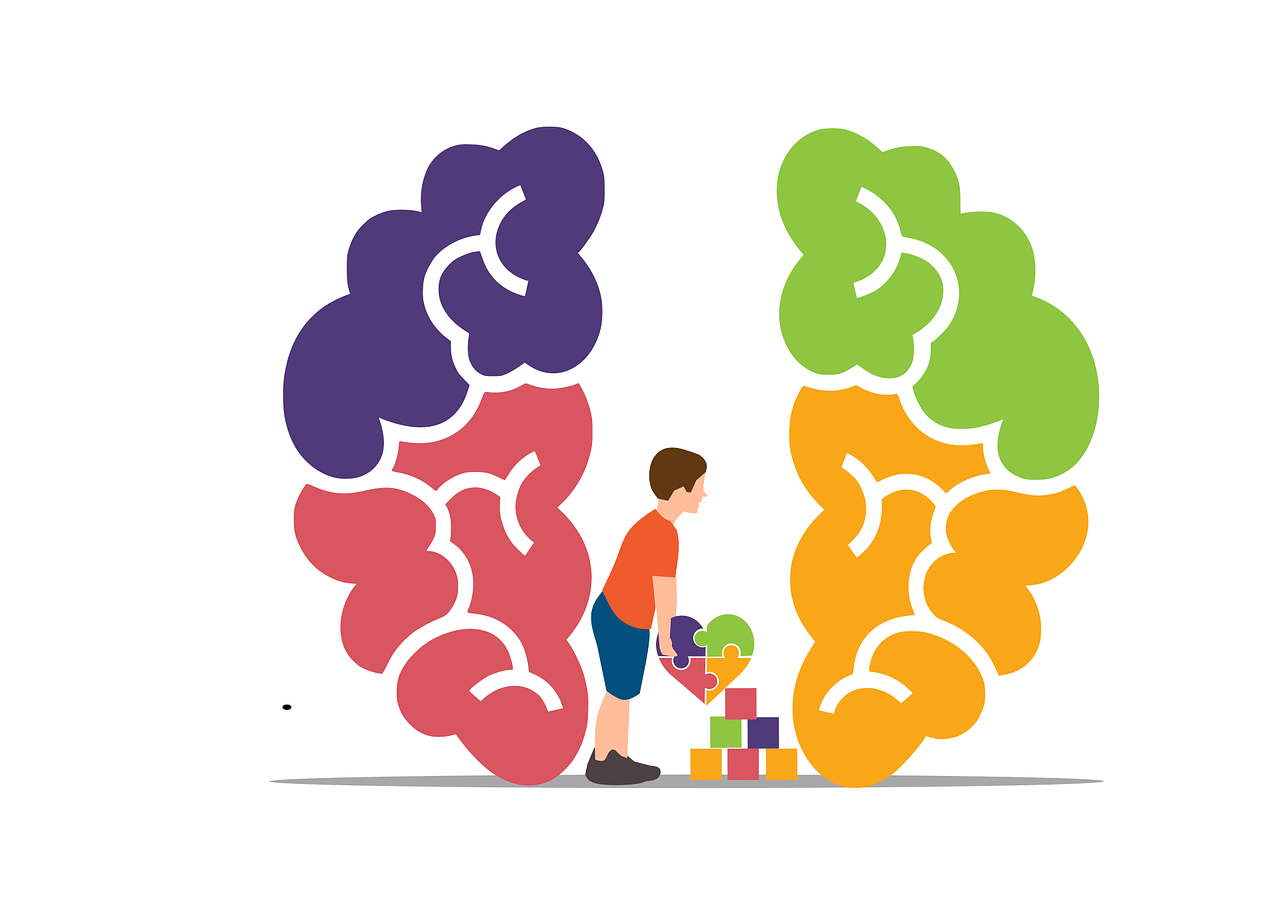
Perfectionism: Artistic, Autistic, Narcissistic or simply Un-Realistic
Perfectionism has a branding problem. Say it in a job interview, and it sounds like a humble-brag ("my biggest weakness is I work too hard"). Say it about an artist, and it sounds romantic. The genius who won't settle. Say it about someone with OCD, and it sounds like suffering. Say it about a narcissist, and it sounds like vanity.

Here's the twist: psychological research suggests all four of those reactions can be correct, because perfectionism isn't a single trait wearing different outfits. It's several different psychological engines that can produce the same surface behavior (relentless standards, chronic dissatisfaction) for completely different reasons. And the engine matters, because it determines whether perfectionism can actually be changed, and how.
This piece breaks down four distinct "faces" of perfectionism, then tackles the deeper question: is perfectionism something you are, or something you're doing?
Face #1: The Artist. Or Is It?
The tortured-artist myth is everywhere: the painter who destroys canvases, the writer who can't let a manuscript go, endlessly chasing some impossible internal standard. It's a compelling story. It's also, according to the data, mostly wrong.
Researchers have drawn a sharp line between two things that get lumped together as "perfectionism":
- Excellencism — chasing high standards that are ambitious but realistic, and staying flexible when you fall short.
- Perfectionism — chasing flawless, all-or-nothing standards, where anything less than perfect feels like failure.
A large body of work by Patrick Gaudreau and colleagues, spanning five studies and over 2,000 participants, found these two mindsets predict opposite outcomes. People oriented toward excellence reported higher life satisfaction and lower depression. People oriented toward perfection reported the opposite. And, in a cruel twist, they aimed for perfect grades more often but actually earned lower grades than the excellence-seekers. The need to be flawless got in the way of the very performance it was supposed to protect.
The same pattern shows up in creativity research. When people were given open-ended, "think of as many ideas as possible" tasks, those chasing excellence generated more ideas — and more original ones — than those chasing perfection. Perfectionism was linked to lower openness to experience, a trait considered central to creative thinking. Perfectionists in these studies also showed an odd disconnect: they believed they were highly creative, even though their actual output said otherwise. Among musicians specifically, the anxious, self-critical strand of perfectionism predicted performance anxiety, while the healthier "high standards" strand predicted more effort and better results — anxiety only crept in when the fear of imperfection took over.
The takeaway: the artist who revises a piece forty times out of genuine love for the craft is in a completely different headspace than the artist who revises it forty times because they're terrified it — and by extension, they — aren't good enough. Same behavior, opposite experience.
Face #2: The Autistic Brain. Rigidity Wearing Perfectionism's Clothes
Perfectionistic behavior is common in autism spectrum disorder (ASD), but it often isn't "perfectionism" in the classic psychological sense at all. The engine driving it is different: cognitive inflexibility, not fear of failure.
A meta-analysis pooling 59 studies and over 4,000 participants confirmed that autistic individuals show significantly more difficulty shifting mental gears compared to neurotypical peers, with "getting stuck" (perseveration) being the most pronounced difference. That rigidity feeds into anxiety and low mood indirectly, largely through a poor tolerance for uncertainty, not knowing what's coming next.
One study comparing boys with ASD to typically developing peers found that the autistic boys reported higher perfectionism and more rigid, all-or-nothing thinking patterns. But — and this is the key finding — the link between those rigid thought patterns and actual emotional distress was weak. In other words, the rigidity was there, but it wasn't obviously being driven by the same self-worth-on-the-line fear that fuels perfectionism in anxiety or OCD.
Here's the practical distinction:
- Classic (anxious/OCD-driven) perfectionism: "I need this to be flawless, or I'll be rejected / I'll have failed / I'm not enough." Fear and self-criticism are the engine.
- Autistic "perfectionism": "This needs to be done this specific way." Often driven by a need for sameness and predictability rather than by self-judgment. Disruption feels distressing not because it threatens self-worth, but because it breaks an expected pattern.
There's real overlap — autistic people are diagnosed with OCD at roughly 4–6 times the rate of the general population — and repetitive routines can look identical to compulsions from the outside. But they often feel different on the inside: autistic repetitive behaviors are frequently experienced as soothing and organizing, while OCD compulsions are experienced as distressing and anxiety-driven, even when they look the same to an observer.
Why this matters: standard therapy for perfectionism (which challenges "I must be flawless" beliefs) may miss the mark entirely for an autistic person whose real target for support is building flexibility and comfort with uncertainty — not disputing self-critical thoughts that were never the driving force to begin with.
Face #3: The Narcissist. Perfection as a Self-Worth Machine
In narcissism, perfectionism isn't really about the task at hand — it's a tool for propping up a fragile, grandiose sense of self.
The clinical manual (DSM-5) actually draws this distinction explicitly: people with obsessive-compulsive personality traits chase perfectionism around order, rules, and rigidity, and tend to be self-critical when they fall short. People with narcissistic traits, by contrast, set sky-high standards specifically around appearance and performance — and are far more likely to believe they've already nailed it. Underneath that confidence, though, sits a real fear: exposure as imperfect, ordinary, or a failure.
Research into narcissism has split it into two related but distinct strategies:
- Narcissistic admiration — the "look how great I am" path. This one links to striving for high performance standards, and comes with short-term perks: confidence, social charm, and assertiveness.
- Narcissistic rivalry — the "everyone else is beneath me" path. This one also drives perfectionistic standards, but pairs them with an unstable ego, arrogance, conflict with others, and contempt for people who don't measure up.
A study following 331 adolescents over time found something important about cause and effect: narcissism tends to drive perfectionism, more than the other way around. As kids' narcissistic self-promotion increased, so did their perfectionistic strivings — not the reverse. Perfectionism, in other words, gets recruited to serve the ego, rather than being the root cause itself.
Clinical writing on this describes it as a punishing cycle: the person uses "being perfect" as almost the only yardstick for their own worth, and every time they hit a goal, the bar goes up again — meaning satisfaction never actually lands. One description captures it well: constantly looking toward an ideal while dreading the fall that comes the moment perfection slips. And it doesn't stop at self-judgment — the same impossible standards often get projected onto other people, who are then quietly (or not so quietly) written off when they fail to meet them.
Why this matters: you can't treat perfectionism in narcissism the same way you'd treat it in an anxious perfectionist. Standard techniques — broadening how someone measures their self-worth, testing whether "flawless" beliefs are actually true — tend to fall flat unless the underlying need for admiration and the shaky self-esteem beneath it are addressed too.
Face #4: Just... Unrealistic
Sometimes there's no deeper story. It's not artistic vision, not neurological wiring, not ego protection — it's simply that the bar has been set somewhere no human being could reasonably clear, and the person can't see that.
This is the core insight behind what researchers call the Model of Excellencism and Perfectionism. The argument: the real dividing line isn't "healthy vs. unhealthy" perfectionism — it's excellence (high, realistic, flexible goals) versus perfection (unrealistic, rigid, black-and-white goals). The hallmarks:
- All-or-nothing standards — anything short of flawless registers as total failure. There's no partial credit, no "pretty good."
- A persistent gap feeling — a nagging sense of distance between where you are and where you "should" be, that never seems to close no matter how much you accomplish.
This is perfectionism at its most stripped-down: not a mask for something else, just standards that were never achievable in the first place, worn as if they were reasonable.
So... Which One Are You?
The point of separating these four isn't to sort people into boxes; most people with real perfectionism will recognize a bit of each. But the function behind the behavior changes what actually helps:
If the engine is...What tends to help: High standards + fear of failure (artistic/anxious)= Testing perfectionistic beliefs, broadening self-worth beyond output
Cognitive rigidity (autistic). Work on building flexibility and tolerance for uncertainty. Not just challenging beliefs.
Self-worth regulation (narcissistic). Work on addressing the underlying fragile self-esteem, not just the perfectionism itself.
Unrealistic standards alone. Work on learning to distinguish excellence from perfection and to build tolerance for "good enough".
The uncomfortable but useful finding across all this research is that perfectionism is rarely the disorder itself. It's usually the visible symptom of something running beneath the surface: fear, rigidity, fragile self-worth, or just a miscalibrated yardstick. Knowing which one is yours is the first real step toward loosening its grip.
Is Perfectionism Something You’re Born With Or Something You Learned?
Here’s a question that changes everything about treatment: Is perfectionism baked into your personality, like being introverted or anxious by nature? Or is it a habit you picked up — a strategy your brain built to handle the world — and can therefore un-learn? The honest answer: it’s both, and the mix looks different depending on which “face” of perfectionism you’re dealing with.
The Case for “You’re Born This Way”
Studies on twins show perfectionism runs in the genes to a real, measurable degree — roughly a third to half of the variation between people in things like fear of making mistakes, second-guessing decisions, and holding rigid personal standards can be traced to genetics rather than environment. Perfectionism also shares a lot of its genetic roots with neuroticism — the broader tendency toward anxiety and emotional reactivity — with the two overlapping substantially at the genetic level. It tends to run in families — perfectionistic parents are more likely to raise perfectionistic kids, though that’s a mix of genes and simply modeling the behavior at home. And when researchers track kids over time, the unhealthy version of perfectionism can already be spotted in middle childhood and tends to stay fairly stable from there, the way a trait would.
The Case for “You Learned This”
At the same time, perfectionism can be understood as a coping strategy — a way of managing a deeper belief that you won’t be accepted unless you look flawless and capable. Underneath it often sits a quieter fear: that the real you is somehow not enough, and that being perfect is the price of being loved or respected. This view is backed up by the fact that perfectionism usually feels helpful to the person doing it, gets rewarded by high-performance environments (school, work, competitive sports), and clearly serves a purpose — avoiding criticism, protecting self-worth, controlling how others see you.
For a long time, perfectionism was treated as a fixed personality trait. That view has shifted — it’s now seen as something that can genuinely change, though different therapy approaches frame the “why” differently:
● An overcontrolled coping style — the view taken by Radically Open DBT and Compassion-Focused Therapy
● A rigid mental rulebook that keeps itself going through biased thinking — the classic CBT view
● A relationship pattern rooted in early experiences with caregivers — the view in Dynamic Interpersonal Therapy and Metacognitive Interpersonal Therapy
● A context, not a fact — ACT and Compassion-Focused Therapy focus on changing your relationship to perfectionistic thoughts, rather than trying to erase the thoughts themselves
How the Mix Shifts Across the Four Faces
● Artistic: mostly learned. The self-doubt that paralyzes creative work is usually a response to criticism, evaluation, or competitive pressure, making it highly amenable to CBT and ACT.
● Autistic: mostly wired in. The cognitive rigidity behind it has real neurodevelopmental roots and doesn’t respond well to standard “challenge your beliefs” therapy. Building flexibility and comfort with uncertainty works better.
● Narcissistic: a learned strategy protecting a deeper vulnerability. The perfectionism itself can shift, but usually only once the fragile self-esteem and need for admiration underneath it are addressed.
● Unrealistic: the most even split of nature and nurture — and, not coincidentally, the type that responds best to standard treatment.
What Actually Helps: Matching Treatment to the Type
The single most important move in treating perfectionism isn’t picking a technique — it’s figuring out what the perfectionism is actually doing for the person. Is it managing a fear of rejection? Keeping a sense of order and predictability intact? Shielding a fragile self-image? Or just standards that have never been questioned?
For Fear-Driven (Artistic-Type) Perfectionism
Cognitive Behavioral Therapy has the strongest evidence base here. The standard approach involves learning about the pattern, widening how you measure your own worth beyond one narrow area, running small real-world experiments to test perfectionistic fears (“what actually happens if I submit this at 90%?”), and directly addressing the self-criticism. In a randomized controlled trial with 110 participants, both a CBT self-help book and an ACT self-help book meaningfully improved perfectionism, well-being, and stress compared to a waitlist group, with ACT edging ahead on reducing harsh self-judgment and rigid thinking specifically. The focus in CBT is less on where the perfectionism came from and more on what’s currently keeping it alive.
For Autistic Presentations
Standard perfectionism therapy needs real adaptation here. Instead of challenging self-critical beliefs (which may not be the actual driver), the more effective focus is:
● Building flexibility gradually, through small, manageable doses of change and unpredictability
● Practicing “good enough” outcomes in concrete, structured ways — not just talking about the idea
● Directly targeting intolerance of uncertainty, which is often the real link between rigidity and anxiety
● Using visual supports, explicit rules, and a predictable session structure that fit how an autistic mind works best
For Narcissistic Presentations
Perfectionism here can’t be treated as its own isolated issue. Metacognitive Interpersonal Therapy (MIT) was built specifically for this: it helps the person recognize the relationship patterns behind their impossible standards, get in touch with the feelings — emptiness, feeling like a fraud, fear of being exposed — that the perfectionism is defending against, and slowly build a sense of self-worth that isn’t entirely dependent on performing and being admired.
For “Simply Unrealistic” Perfectionism
This is the most straightforward case to treat. Effective moves include:
● Behavioral experiments: testing whether lowering the bar actually causes the feared outcome — rejection, failure, losing respect
● Broadening self-worth: building a sense of value that comes from more than one performance area
● The excellence reframe: explicitly teaching the difference between pursuing excellence (flexible, high, realistic) and pursuing perfection (rigid, unreachable, all-or-nothing)
● Naming the paradox: using the person’s own results to show that perfectionism is often quietly working against the very performance it’s meant to protect
Two Skills That Help No Matter Which Face You Have
Self-compassion. Being kind to yourself changes how much perfectionism actually hurts. People with high perfectionism who are also high in self-compassion report meaningfully less distress than equally perfectionistic people who are hard on themselves. Even when the perfectionism itself doesn’t fully go away, softening your relationship to it can meaningfully ease the suffering.
Psychological flexibility. Being able to notice a thought like “this isn’t good enough” without automatically obeying it is a learnable skill — and it helps across all four types. This is the core insight of ACT: you don’t have to lower your standards or change your beliefs before you can feel better. You just have to change your relationship to them.
Don’t Pathologize the Drive — Target the Fear
Across every type, one finding holds up: it’s the worry — fear of mistakes, harsh self-judgment, dread of falling short — that drives the suffering, not the high standards themselves. Having high personal standards is neutral or even mildly helpful when the fear attached to them is low. So good therapy isn’t about getting someone to care less about doing well — it’s about helping them pursue excellence with self-compassion instead of pursuing perfection with self-punishment.
It’s Not Just an Individual Problem
Perfectionism doesn’t happen in a vacuum. It’s fed by workplaces, families, schools, and social media environments that reward flawlessness and punish mistakes. Individual therapy matters, but it can only do so much if someone goes home to an environment that keeps flipping the same switch. Psychological safety at work, realistic expectations in training and school settings, and helping families understand the difference between encouraging excellence and demanding perfection are all part of the picture — not just optional extras.
The Four Faces at a Glance
Artistic. The core driver is a fear of creative inadequacy — the sense that the work, and by extension the self, might not measure up. The emotional signature is a mix of fear of judgment and genuine love of the craft, which is what makes it so easy to mistake for passion. This face leans more toward learned strategy than fixed trait, and the key distinction to watch for is excellence versus perfection — flexible high standards versus rigid, all-or-nothing ones. It responds well to CBT and ACT aimed at perfectionistic concerns.
Autistic. The core driver is cognitive inflexibility and a need for sameness, not fear of judgment. The emotional signature is distress at the disruption of expected patterns — not the self-evaluative fear seen in the artistic or unrealistic types. This face leans more toward a trait, with real neurodevelopmental roots, and the key distinction is rigidity versus self-evaluative fear. Treatment responsiveness is moderate, limited by the rigidity's trait-based nature, and works best through flexibility training and building tolerance for uncertainty rather than standard belief-challenging.
Narcissistic. The core driver is fragile self-worth and the ongoing maintenance of a grandiose self-image. The emotional signature is fear of exposure to imperfection — the dread of being caught out as ordinary or flawed. Here, perfectionism functions as a strategy in service of a deeper trait-level vulnerability. The key distinction is self-worth regulation versus quality control. Treatment responsiveness is moderate and requires deeper personality-level work, typically through Metacognitive Interpersonal Therapy (MIT), which addresses the narcissistic self-regulation system before the perfectionism itself can shift.
Unrealistic. The core driver is simply rigid, unexamined standards — no deeper story underneath. The emotional signature is fear of failure paired with a persistent discrepancy feeling, a gap between where you are and where you “should” be. This face reflects the most even mix of traits and strategies — a heritable predisposition maintained by learned patterns — and the key distinction is between unrealistic and achievable standards. It's also the most responsive to treatment, typically standard CBT for perfectionism.
The Bottom Line
Perfectionism isn’t one thing. It wears different masks in different people — the artist paralyzed by self-doubt, the autistic person distressed by any break in routine, the narcissist terrified of being caught out as imperfect, the high-achiever who genuinely can’t see that their own bar is unreachable. Each version has a different driver, a different job it’s doing, and needs a different kind of help.
But here’s what ties them together: the suffering never comes from having high standards. It comes from a rigid, fearful, self-critical relationship to those standards. And that relationship — whether it’s mostly learned, mostly wired in, or some mix of both — can change. The goal was never to make someone care less about doing well. It’s to help them chase what actually matters to them without being flattened by the fear of falling short.
Ready to Work Through This With Someone?
Reading about perfectionism can help you name the pattern — but untangling which “face” is driving yours, and what to actually do about it, is easier with a trained therapist or coach in your corner. Reach out to figure it out
.