"Kitchen is where I do my homework!" :) or :( ?
Wardrobe, pencils, closeness to family and school work
Adults might think that shoes, necklaces or socks have little to do with doing well in school. Think again. Success in school is dependent on factors that create and help students belong.
As a result, sneakers, backpacks, lunch-bags, water bottles, phone chargers, organizers for lockers for older children, etc. play a big role in school adjustment and consequently academic achievement.
Check in with your kid about the following:
Teach your child how to scan and save handouts with their phones (e.g., Notes in i-phones).
Organize their personal space for doing school work. Create a folder that they can place in their backpack each time they complete the work. This reduces losing assignments.
Check their desk chair, desk light, and overall organization of the child’s work area.
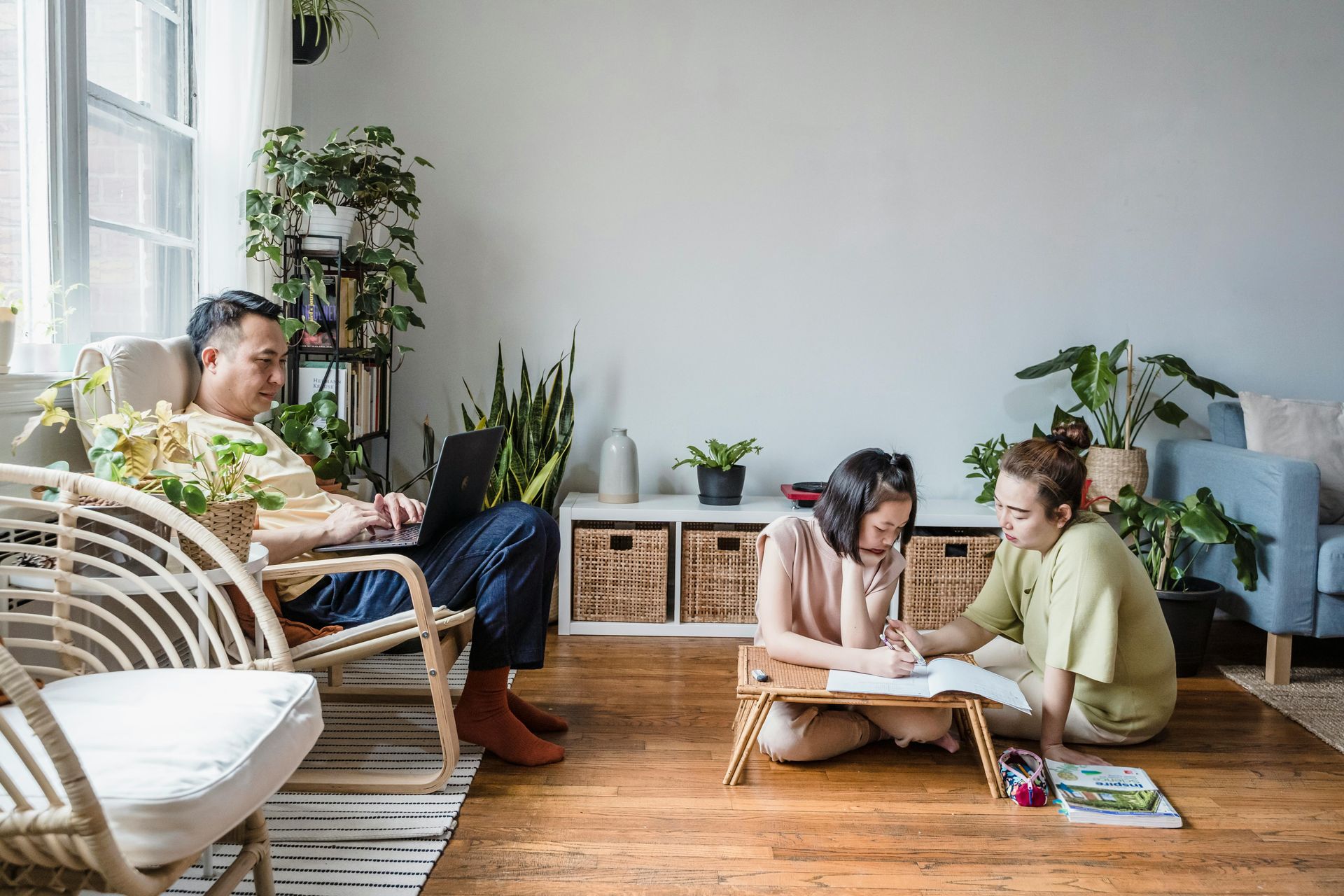
A lot of children like doing their work in common places, close to their parents or caretakers. Perceived availability of help is comforting and encouraging to many kids, even teens. Not the help itself, but knowing that they can get help should they need has been shown to improve homework and home-based learning rates.
Seems silly to grown ups, but blue text messages on i-phone help social life in middle and high school. If your child is allowed to have a phone, ask what helps them be on the same apps as their close friends. Check the apps and install parental controls ahead of time.
Get a traditional alarm clock. Don't ask the children to use their phones as alarm clocks. It sets the chain of behaviors where first the alarm is “snoozed”, then forgotten about and then once the child manages to open their eyes, the phone in hand triggers social media watching and forgetting all about needing to get up, get dressed, etc.
"Lazy" does not exist. Withdrawn, overwhelmed, disorganized are more like it.
Looking for more specific pointers and strategies? Contact us and our clinicians will be happy to help